RV Inverter Repair - Daytona Beach, FL
RV Repair Daytona Beach diagnoses inverter faults on-site using a calibrated load tester and digital multimeter to separate inverter failure from battery bank and wiring problems. We service pure-sine and modified-sine units from Xantrex, Victron, Magnum, and Aims. If the inverter has failed beyond repair, we carry stock replacement units in common wattage classes and can complete a swap in under two hours.
How to Distinguish RV Inverter Failure from Battery Bank Failure - The Most Common Misdiagnosis
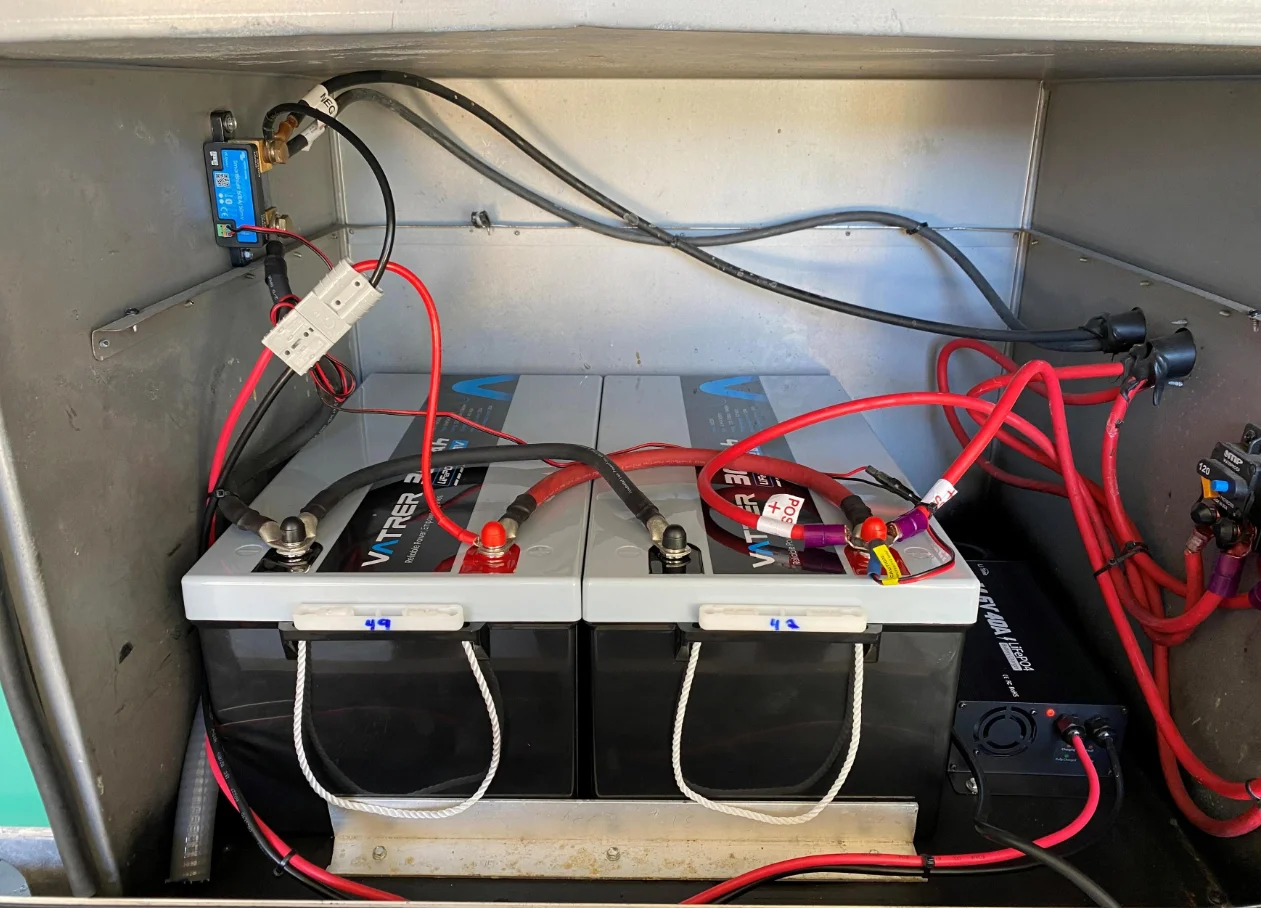
The most common inverter diagnostic mistake is replacing a functional inverter because the battery bank is causing low-voltage shutdowns. An inverter that shuts off with a low-battery warning is doing exactly what it is designed to do - protecting the battery bank from deep discharge. If the battery bank sags below the inverter's low-voltage disconnect threshold within minutes of energizing a modest load, the battery bank - not the inverter - has failed.
RV Repair Daytona Beach load-tests each battery in the house bank individually using a conductance meter and a resistive load tester before evaluating any inverter fault. A six-battery 12V AGM bank where one battery has failed internally can drain the entire bank rapidly under load even though the other five batteries test good at rest. Finding and replacing the weak battery often resolves what appeared to be an inverter failure at no parts cost beyond the one battery.
Only after confirming the battery bank can hold voltage under load do we proceed to inverter-specific diagnostics.
Diagnosing Xantrex, Magnum, and Victron RV Inverter Faults On-Site
After confirming the battery bank is sound, our inverter diagnostic begins with the unit's onboard fault log. Xantrex Freedom HFS and Magnum Energy units store fault codes that identify whether the fault was a low-voltage event, an overtemperature condition, an output overload, or an internal component failure - information that focuses the physical inspection before any components are tested. Victron Multiplus units log all fault events in their VE.Bus system and can be read with a laptop and the Victron VictronConnect app.
After reviewing the fault log, we test inverter DC input voltage at the terminal block under load to confirm adequate battery voltage is reaching the unit. We then test AC output voltage and frequency under a controlled resistive load to confirm the output stage is functional. For units showing correct DC input and no AC output, we test the internal transfer relay and the inverter driver board - the most common failure points on units that have correct DC input but no AC output.
RV Electrical System Repair Cost in Daytona Beach, FL
| Service | Typical Cost | Notes |
|---|---|---|
| Service Call + First Hour | $299 - $399 | Travel + diagnostics anywhere in Volusia County |
| Battery Replacement | $150 - $400 | Per battery; group 27 / 31 deep cycle |
| Converter / Charger Repair | $200 - $600 | Diagnose and repair or replace |
| Inverter Repair or Replacement | $300 - $800 | Modified or pure sine wave units |
| Shore Power Outlet Repair | $100 - $250 | 30A or 50A pedestal connection |
| Breaker Panel Repair | $200 - $500 | Includes diagnosis and breaker swap |
| Wiring Diagnosis | $150 - $350 | Fault isolation; one-hour minimum labor |
Pricing note: Ranges shown are average costs for the Daytona Beach, FL market based on common repair scenarios. The exact cost of your repair depends on your RV make and model, the severity of the issue, and parts availability.
Only a technician on-site can provide an accurate estimate after inspecting your RV. A written estimate is provided before any work begins - you approve it before we start.
RV Inverter Repair - Common Questions
My inverter powers on but the output voltage is wrong - is it repairable?
Low or unstable AC output usually points to a failed capacitor bank or degraded MOSFET array inside the inverter. On smaller modified-sine units this is sometimes repairable on-site; on larger pure-sine units the internal components are often potted, making a swap more practical. We test output waveform and voltage under load before recommending repair versus replacement.
How do you know if the inverter or the batteries are causing the fault?
We load-test the battery bank independently first - a battery bank that sags below 11.5V under moderate draw will trigger inverter low-voltage shutdown and look like an inverter failure. If the batteries hold voltage, we then stress-test the inverter directly. This sequence prevents replacing a good inverter when the real culprit is a weak AGM or lithium cell.
My Xantrex Freedom inverter/charger stopped inverting but still charges - what failed?
On Xantrex Freedom HFS and Freedom X units, the inverter and charger circuits share the same control board but run through separate output stages. A failure isolated to the inverter side - with charging intact - typically means a blown inverter output relay or a failed inverter driver circuit on the board. We carry Xantrex-compatible control boards and can confirm the diagnosis with the unit's onboard fault codes before ordering.
Is a modified-sine or pure-sine inverter better for an RV?
A pure-sine inverter is the correct choice for any RV running sensitive loads including variable-speed appliances, CPAP machines, laptop computers, and modern LED lighting with electronic dimmers. Modified-sine inverters can run simple resistive loads like incandescent lights and older appliances but cause heat buildup in motor windings and can damage or shorten the life of electronically controlled devices. RV Repair Daytona Beach recommends pure-sine units from Xantrex or Victron for all new installations.
How large an inverter do I need to run my RV air conditioner?
A 13,500 BTU Coleman Mach or Dometic rooftop AC unit requires approximately 1,500 to 2,000 watts of continuous inverter output and a startup surge of 3,500 to 4,500 watts - which exceeds most standard 2,000-watt inverters. A Micro-Air SoftStartRV installed on the AC compressor reduces startup surge to below 2,000 watts, which brings a 15,000 BTU unit within the range of a quality 3,000-watt pure-sine inverter backed by an adequate lithium or AGM battery bank. We size both the inverter and the battery bank together when planning these installations.