RV Gel Coat Crack & Chip Repair - Daytona Beach, FL
RV Repair Daytona Beach repairs gel coat cracks, impact chips, and stress fractures on RV sidewalls, end caps, and compartment doors at your location. Repair runs $300-800 per panel with color matching. Cracks left unrepaired allow water infiltration that starts delamination - a $300 gel coat repair prevents a $3,000 panel replacement.
Why RV Gel Coat Cracks and What Happens If You Ignore Them
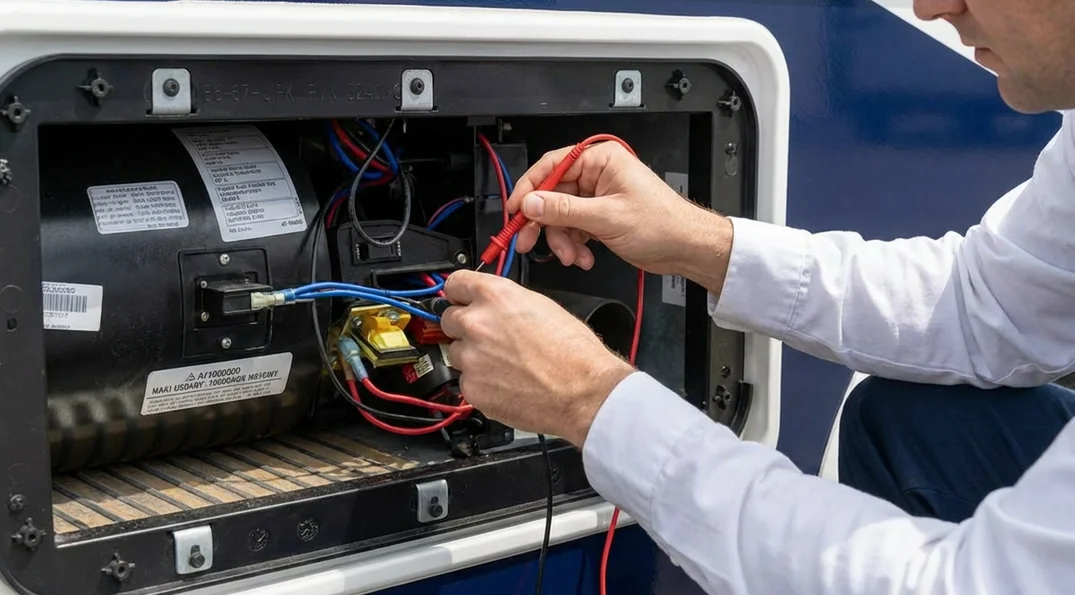
Gel coat develops cracks from three sources: impact damage from road debris or low-clearance contact, stress cracking from the flexing of the fiberglass panel during travel, and crazing from UV exposure that dries and shrinks the surface over years of sun. All three types are cosmetic at first - they do not affect the structural strength of the fiberglass laminate beneath. What makes cracks dangerous is what they let in.
A hairline crack in the gel coat allows rainwater to wick into the fiberglass strands beneath through capillary action. Over time, that moisture reaches the foam core of the sandwich panel and begins two degradation processes: in cold climates, freeze-thaw cycling expands the crack and separates the skin from the foam; in warm climates, moisture in the foam promotes mold growth and foam degradation. Both processes lead to delamination - the outer skin separating from the core - which is a far more expensive repair than the original crack.
How We Repair Gel Coat Cracks On-Site
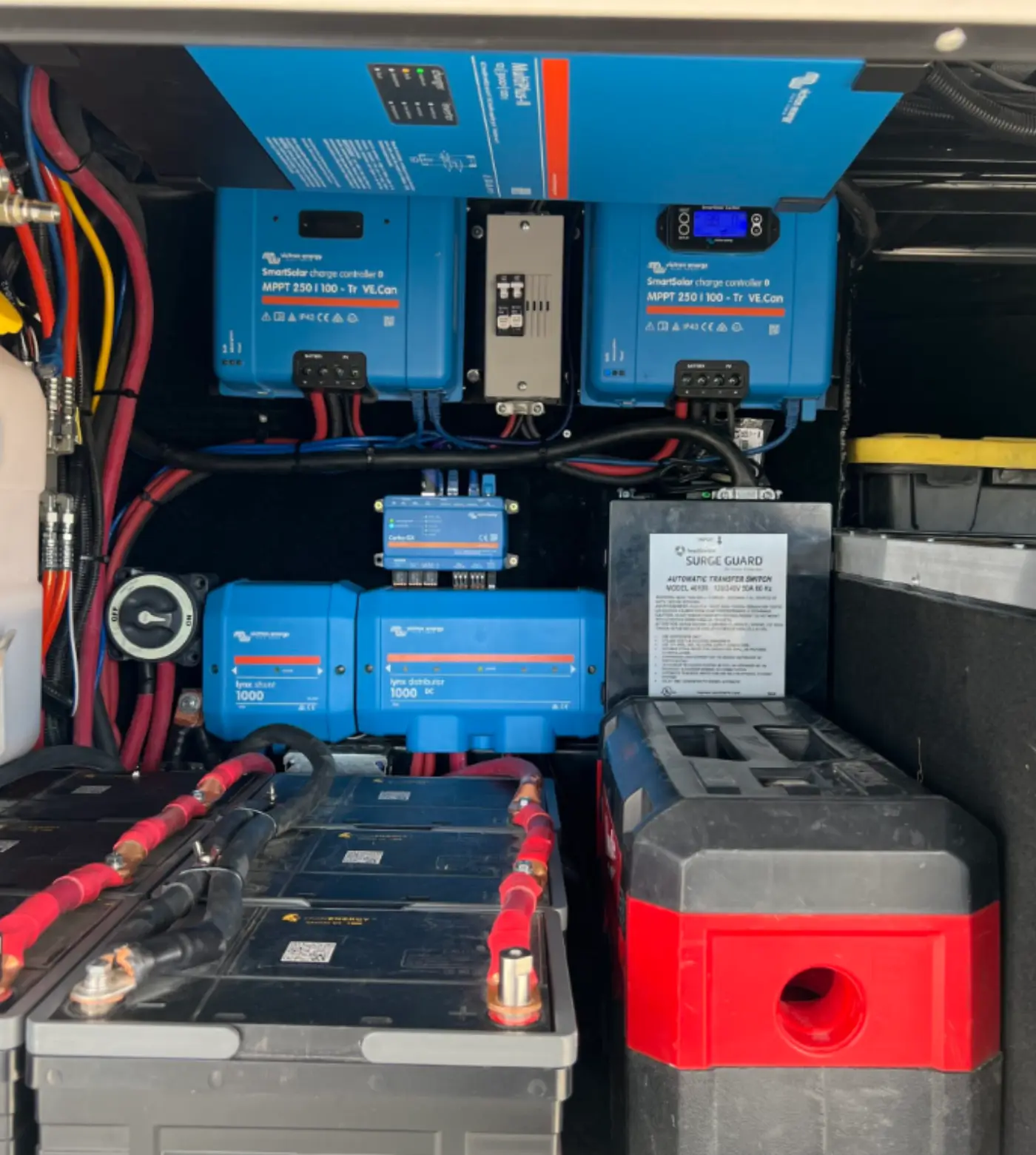
Surface preparation is the step that determines whether a gel coat repair lasts. We clean the panel with acetone to remove all wax and road film, then open the crack with a die grinder to create a V-groove profile. Bridging a crack with filler without opening it first creates a repair that re-cracks at the original line within one season because the filler has no mechanical bond to the substrate.
For shallow surface cracks, we use a UV-stable polyester gel coat filler tinted to match the panel color. For impact chips that have removed material down to the laminate, we build up with a structural polyester filler first, cure it, then apply the color-matched gel coat over the top. Cured gel coat is wet-sanded from 400 to 2000 grit and machine polished to blend gloss.
Color matching on white and off-white panels is straightforward; two-tone and graphic panel repairs are more complex and may require multiple mixed batches to get the shade correct. We do a test patch before committing to the full repair on difficult color matches.
RV Fiberglass & Exterior Body Repair Cost in Daytona Beach, FL
| Service | Typical Cost | Notes |
|---|---|---|
| Service Call + First Hour | $299 - $399 | Travel + diagnostics anywhere in Volusia County |
| Small Crack or Chip Repair | $150 - $350 | Gel coat fill and blend; up to 6 inches |
| Impact Damage Repair | $350 - $800 | Structural filler, gel coat, and color match |
| Gel Coat Oxidation Buff and Polish | $300 - $700 | Full side or cap restore; Florida UV damage |
| Sidewall Delamination Assessment | $150 - $400 | Moisture probe, tap test, written report |
| Delamination Repair (per panel) | $500 - $1,800 | Structural reglue, inject, and clamp; per section |
Pricing note: Ranges shown are average costs for the Daytona Beach, FL market based on common repair scenarios. The exact cost of your repair depends on your RV make and model, the severity of the issue, and parts availability.
Only a technician on-site can provide an accurate estimate after inspecting your RV. A written estimate is provided before any work begins - you approve it before we start.
RV Gel Coat Crack & Chip Repair - Common Questions
Can gel coat cracks be repaired to invisible - or will I always see the repair?
On white and light solid-color panels, a properly done gel coat repair blends well enough that it is not visible at normal viewing distance. Under close inspection in raking light, a slight texture difference may be detectable.
On older panels where the original gel coat has yellowed from UV, the fresh repair will be a slightly brighter white until the new gel coat weathers to match - typically 6-12 months. On metallic, pearl, or two-tone color panels, perfect invisibility is harder to achieve without refinishing the full panel.
My RV has small cracks all over the front cap - what causes that and what does it cost to fix?
Widespread small cracks all over a front cap or end cap is called crazing and is caused by UV degradation of the gel coat surface - the surface shrinks from oxidation and the underlying panel does not, creating a network of tiny cracks. Spot repair of individual cracks in a crazed panel is not effective because new cracks continue to develop in the degraded gel coat.
The correct repair for a fully crazed cap is to sand the entire surface to remove the oxidized gel coat layer, apply a barrier primer, and refinish with a two-part urethane topcoat - work best done at a body shop with a spray booth. We can assess and document the condition for insurance if the crazing is UV-accelerated from a prior impact event.
Is it worth repairing gel coat cracks on a 15-year-old RV?
The question is whether the cracks are allowing water infiltration into the wall structure. A cosmetic crack on a rig that is used seasonally and stored covered in a dry climate is a lower priority.
The same crack on a rig stored outdoors in Florida year-round is a water damage risk that gets worse every rainy season. We assess whether the crack has penetrated the laminate and whether there is any delamination adjacent to it, and give you a practical recommendation based on the rig condition and your usage pattern.