RV Generator Carburetor Service - Daytona Beach, FL
RV Repair Daytona Beach cleans and rebuilds RV generator carburetors on-site, addressing hard starts, rough running, fuel flooding, and surging caused by varnish deposits and clogged jets from ethanol-blend fuel. The carburetor is removed, ultrasonically cleaned or bench-cleaned with aerosol carb cleaner, and reassembled with a new gasket kit. Most carburetor service appointments take 1.5 to 2.5 hours at your campsite or driveway.
How Ethanol Fuel Damage Affects RV Generator Carburetors
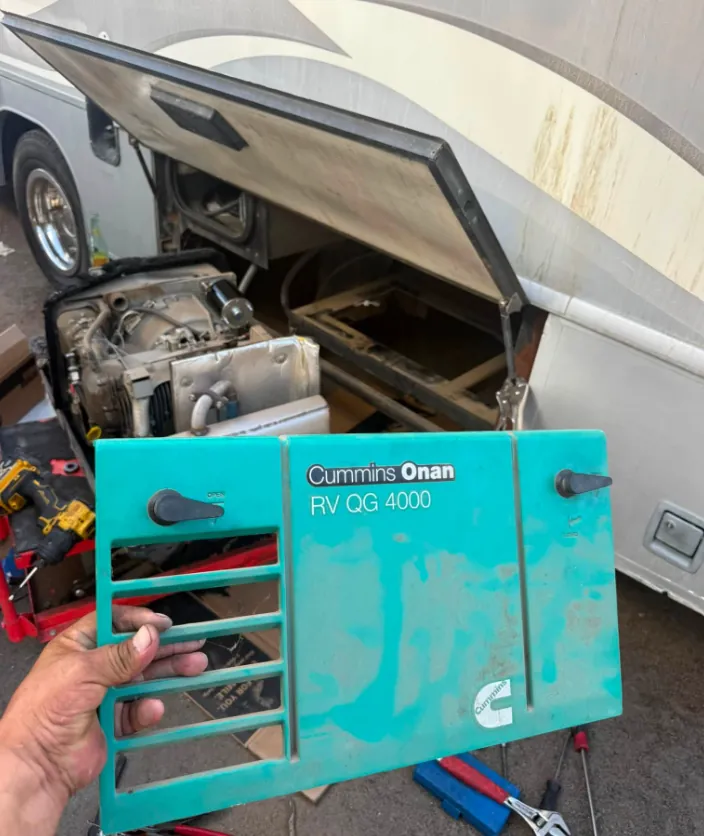
Gasoline sold in the United States contains 10 percent ethanol by law in most states. Ethanol is hygroscopic - it absorbs water from humid air through the generator vented fuel cap. When the generator sits unused for 30 or more days, the ethanol and water separate from the gasoline, sinking to the bottom of the float bowl where they enter the carburetor circuits first.
The ethanol component also acts as a solvent that softens and degrades rubber gaskets, needle tips, and accelerator pump diaphragms. RV Repair Daytona Beach sees ethanol damage as the primary cause of carburetor failure on Onan QG gasoline, Honda EU-series, and Generac portable RV generators. Cleaning is effective when the varnish is light; a full rebuild with a new gasket kit is required when the rubber components have begun to swell or distort.
What Is Included in a Full Generator Carburetor Service
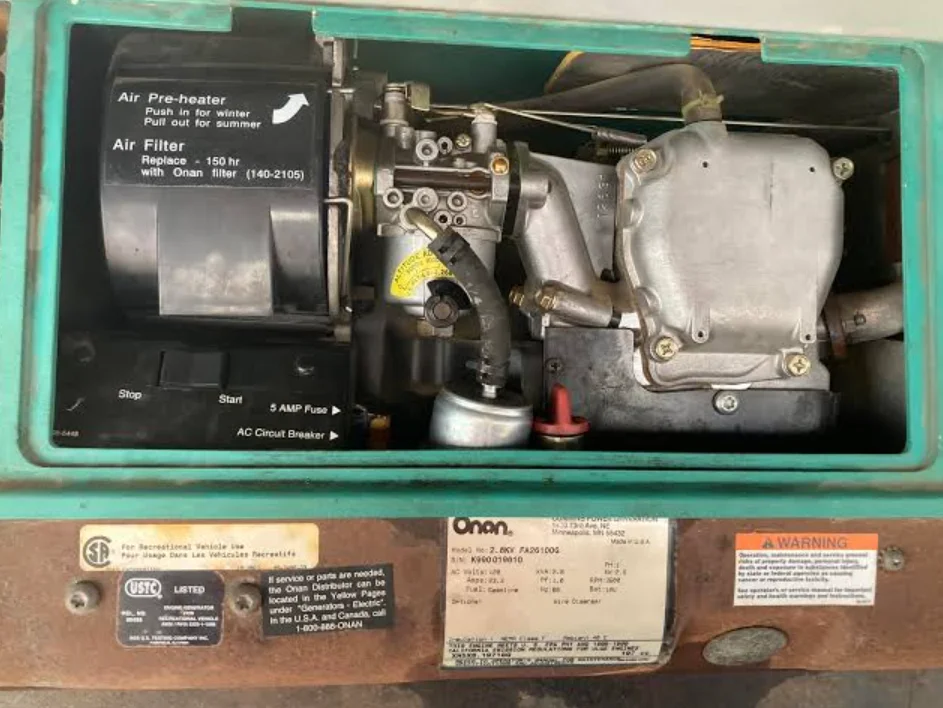
A complete carburetor service from RV Repair Daytona Beach covers removal of the carburetor from the generator without pulling the generator from the RV compartment in most cases. The float bowl is drained and inspected for water contamination. The main jet, pilot jet, and idle port are cleaned with aerosol carb cleaner and compressed air, or removed and placed in an ultrasonic bath for severe varnish cases.
The float needle tip is inspected for wear grooves and replaced if present. The float height is set to the manufacturer specification using a depth gauge, which controls maximum fuel level in the bowl and prevents flooding. All gaskets and O-rings are replaced from a matched kit before reassembly.
The carburetor is reinstalled, the fuel supply is verified, and the generator is run through a cold-start and load test before the service is closed.
Generator Surging Diagnosis - Carburetor or Governor
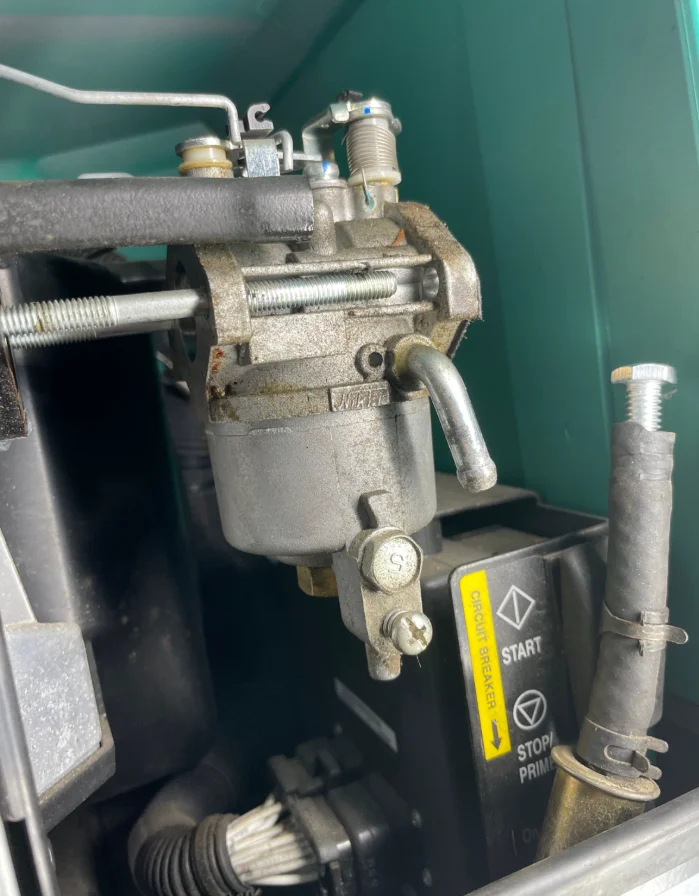
A generator that surges rhythmically - producing a wah-wah-wah sound at 2 to 4 cycles per second - could have a dirty idle circuit in the carburetor or a worn governor spring that has lost calibrated tension. Distinguishing between the two requires running the generator under a constant resistive load at approximately 50 percent rated wattage. If the surging stops under that load, the carburetor idle and progression circuits are the cause.
If surging continues regardless of load level, the governor linkage or spring is the culprit. RV Repair Daytona Beach tests both possibilities in a single visit and does not replace carburetor components if the governor is the confirmed fault. Carburetor rebuilds on Onan QG 4000 and 5500 units run 1.5 to 2.5 hours on-site.
Governor spring replacement typically adds 30 minutes to that service.
Preventing Future Carburetor Varnish on RV Generators
The most effective strategy to prevent carburetor varnish between camping seasons is to treat every tank of generator fuel with a fuel stabilizer rated for ethanol blends, such as Sta-Bil 360 or Star Tron enzyme treatment. The stabilizer should be added first and the generator run under load for at least 20 minutes after treatment to ensure the additive circulates through the float bowl and all carburetor circuits. Storing the generator with the fuel bowl drained is an alternative approach on units with an accessible bowl drain, but it leaves residual fuel in the jets that still varnishes over a winter season.
RV Repair Daytona Beach recommends the stabilizer approach because a dry carb can also allow dried rubber gaskets to crack. Running the generator at 50 to 75 percent load for 30 minutes monthly - even when camping is not planned - maintains fuel circulation and catches problems before they strand you on a trip.
RV Generator Repair Cost in Daytona Beach, FL
| Service | Typical Cost | Notes |
|---|---|---|
| Service Call + First Hour | $299 - $399 | Travel + diagnostics anywhere in Volusia County |
| Oil and Filter Service | $80 - $150 | Includes oil, filter, and spark plug |
| Pre-Event Service Package | $200 - $350 | Oil, filter, plug, air filter, fuel treatment, load test |
| Fuel System Flush and Treatment | $100 - $250 | Stale fuel / ethanol phase-separation fix |
| Generator Won't Start Diagnosis | $150 - $350 | Fuel system and ignition trace |
| Overload Trip Reset and Diagnosis | $100 - $250 | Load test included |
| Control Board Replacement | $400 - $900 | Onan part; sourced and programmed on-site |
Pricing note: Ranges shown are average costs for the Daytona Beach, FL market based on common repair scenarios. The exact cost of your repair depends on your RV make and model, the severity of the issue, and parts availability.
Only a technician on-site can provide an accurate estimate after inspecting your RV. A written estimate is provided before any work begins - you approve it before we start.
RV Generator Carburetor Service - Common Questions
How do I know if my RV generator problem is the carburetor and not something else?
A carburetor problem usually shows up as a generator that starts only with full choke, surges at idle, runs rough under light load, or floods and smells strongly of raw fuel. If the generator ran fine then sat for more than 30 days on ethanol gasoline, a varnished carburetor is the first thing to rule out.
Can you clean the carburetor without removing the generator from the RV?
Yes. On most Onan and Honda EU-series generators installed in a compartment, the carburetor can be accessed and removed without pulling the full generator unit. RV Repair Daytona Beach technicians are familiar with the tight access points on popular installations and carry the proper angled tools to minimize disassembly time.
Should I use a fuel additive to prevent carburetor buildup between service visits?
Sta-Bil 360 or Star Tron enzyme treatment added at every fill-up reduces varnish formation significantly, especially if the generator sits unused for weeks at a time. We recommend running the generator under load for 20 minutes after treatment to circulate the additive through the entire fuel circuit including the float bowl.
Can I clean my RV generator carburetor myself with spray cleaner without removing it?
Spraying carb cleaner into the air inlet while the generator is running can flush out light surface varnish from the throttle bore and help with mild surging, but it does not reach the main jet, pilot jet, or idle circuit passages that are typically blocked in a true varnish failure. RV Repair Daytona Beach removes, disassembles, and rebuilds the carburetor so every passage is confirmed clear before the generator is returned to service.
My generator was just sitting for three months and now it surges - is that definitely the carburetor?
Three months of storage without a fuel stabilizer is the classic setup for a varnished idle circuit, so yes - carburetor varnish is the most likely cause of post-storage surging. Before tearing into the carb, RV Repair Daytona Beach confirms by running the generator at 50 percent load: a load-dependent surge that clears at higher throttle is carburetor, while a surge that continues at all loads points to the governor spring. The load test takes 10 minutes and determines which repair is needed.
Should I replace the entire carburetor or just rebuild it?
Rebuilding with a new gasket kit is the right choice when the carburetor body, float, and main jet are undamaged. A full carburetor replacement makes sense when the body casting is cracked, the fuel inlet threads are stripped, or the float is punctured and no longer available as a separate part. RV Repair Daytona Beach quotes both options when a full replacement is considered so you can make the call based on actual cost difference rather than a guess.