RV Pipe Repair - Daytona Beach, FL
RV Repair Daytona Beach finds and fixes broken, frozen, or pinhole-leaking water lines on-site - PEX, PVC, and poly tubing are all common in RVs and we carry fittings and push-connect connectors for each. We use a pressure test to isolate the leak before opening any wall or cabinet. Most single-section pipe repairs are done in under two hours without cutting into finished walls.
RV Water Line Materials and Their Failure Patterns
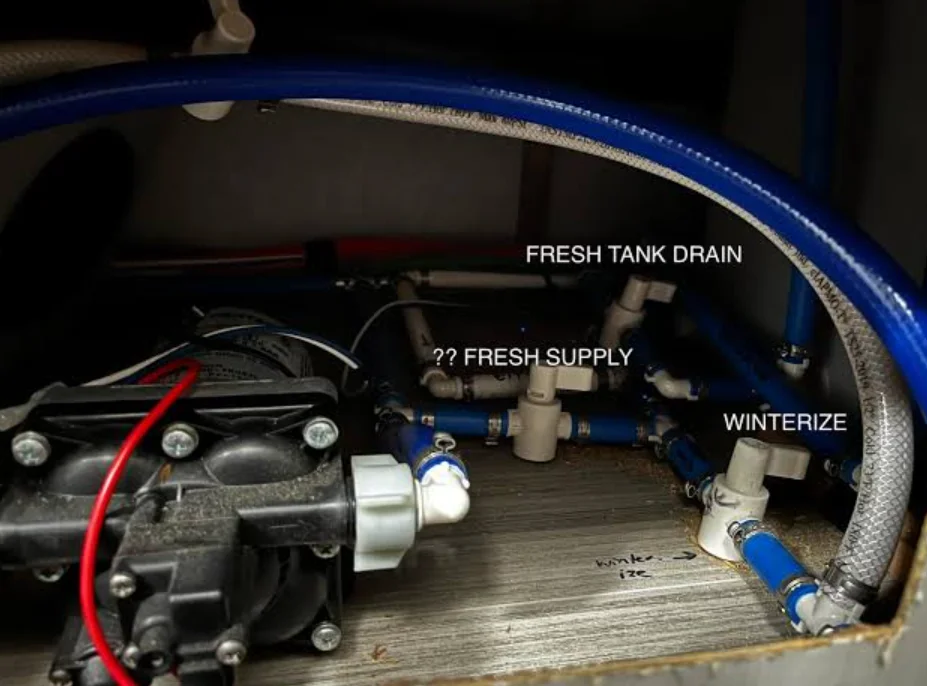
RV fresh water plumbing uses three primary materials, each with distinct failure modes. Cross-linked polyethylene (PEX) is the most common in post-2005 RVs. It is flexible, moderately freeze-resistant, and easy to work with push-connect fittings.
It fails primarily at crimp and clamp ring connections when the fitting bites a soft spot in the tube wall, and at freeze events where expansion exceeds elasticity. Polyvinyl chloride (PVC) rigid pipe is found in older rigs and some drain connections. It is more brittle than PEX, cracks under freeze events and road vibration, and is joined with solvent cement that fails at joints if applied unevenly during original construction.
Polybutylene (PB) gray tubing found in pre-1995 rigs has a documented failure pattern of internal chlorine oxidation that causes brittleness regardless of age. RV Repair Daytona Beach identifies the pipe material before selecting fittings - a SharkBite push-connect fitting that works on PEX may not be rated for a specific PB diameter without a PB-specific insert.
Locating Hidden Water Leaks Without Wall Damage
The most common complaint on a water line call is not a visible burst but a hidden leak discovered through floor softness, cabinet staining, or a pump that cycles with no faucet open. RV Repair Daytona Beach uses a two-instrument approach to locate hidden leaks without destructive wall access. First, we pressurize the fresh water system to 60 PSI with the pump off and observe whether pressure holds on a gauge at the city water inlet - a drop confirms an active leak.
Second, we use an acoustic listening device held against wall surfaces and cabinet floors to locate the sound of water flow where no fitting should be running. The acoustic method is accurate to within 6 to 12 inches behind finished walls. Once located, we access the line through the nearest existing access point - a cabinet interior, under-bed compartment, or existing panel - rather than cutting through finished surfaces.
In most hidden leak calls, the failure point is within reach of an existing access point.
Repairing Freeze Damage After Winter Storage
Freeze damage is the most common RV pipe repair call in late winter and early spring. When water expands during a hard freeze, it creates approximately 2,000 PSI of force inside a closed pipe. PEX tubing is remarkably freeze-tolerant because it expands radially rather than splitting immediately, but crimp and clamp ring fittings are rigid and fail first.
The failure pattern for freeze damage is almost always a split at the fitting body rather than mid-run. RV Repair Daytona Beach maps all water line runs in the coach before beginning repairs on a freeze-damaged system, because a rig that froze long enough to split one fitting very likely has multiple failed points throughout. We trace each supply run, pressurize section by section, and identify all failure points before beginning work.
SharkBite push-connect fittings allow rapid installation for freeze repairs without soldering or specialized crimping tools. After all repairs are made, we pressurize the complete system to 60 PSI and hold for 10 minutes before confirming it is sound.
City Water Inlet and Pressure Regulator Service
The city water inlet is one of the highest-stress points in RV plumbing because it transitions between variable external campground pressure and the fixed RV system. Campground water pressure ranges from 30 PSI at an underpowered rural site to over 100 PSI at a full-hookup resort - RV plumbing is generally rated for a maximum of 80 PSI. Without a pressure regulator at the inlet, high-pressure connections routinely split fittings and wear out check valves.
RV Repair Daytona Beach installs a gauge-type adjustable pressure regulator on any rig that lacks one - typically set to 55 to 60 PSI, maintaining good shower flow well below burst ratings. The inlet fitting contains an internal check valve that prevents tank water from back-flowing to the city connection when the on-board pump runs. When this check valve fails, the pump pressurizes the city hose and can overload the campground pedestal regulator.
We test check valve function during every city inlet service and replace failed valves on the spot.
RV Plumbing Repair Cost in Daytona Beach, FL
| Service | Typical Cost | Notes |
|---|---|---|
| Service Call + First Hour | $299 - $399 | Travel + diagnostics anywhere in Volusia County |
| Water Pump Replacement | $150 - $350 | Shurflo / Flojet; includes fittings |
| Water Heater Repair | $200 - $600 | Suburban or Atwood; pilot, element, or thermostat |
| Toilet Replacement | $200 - $500 | Standard ball-valve or foot-pedal model |
| Tank Leak Repair | $150 - $400 | Black or grey tank; sealant or fitting swap |
| Fresh Water Pipe Repair | $100 - $300 | PEX fitting or section replacement |
| Water Filter System Install | $150 - $400 | Inline filter; canister or whole-coach |
Pricing note: Ranges shown are average costs for the Daytona Beach, FL market based on common repair scenarios. The exact cost of your repair depends on your RV make and model, the severity of the issue, and parts availability.
Only a technician on-site can provide an accurate estimate after inspecting your RV. A written estimate is provided before any work begins - you approve it before we start.
RV Pipe Repair - Common Questions
How do you find a water leak inside an RV wall without tearing out paneling?
We pressurize the fresh water system and listen with an acoustic leak detector, then trace the wet zone by feel and moisture meter before making any cuts. In most cases we can access the broken line through an existing cabinet or access panel.
My RV pipes froze and burst over winter - what is involved in repairing them?
Freeze damage typically splits PEX lines at the high-pressure fittings first. We map the system, replace burst sections with SharkBite push-connect fittings rated for PEX, and pressure-test at 60 PSI before closing up the repair.
Can you repair a pinhole leak in an RV water line without replacing the entire run?
Yes - a pinhole in a straight section of PEX or poly line is repaired by cutting out a short segment and inserting a coupling on each end. The full line only needs replacement if the material is brittle from age or UV damage throughout.
How do I prevent my RV pipes from freezing on a cold-weather camping trip?
The most effective freeze prevention for a parked RV is keeping a heat source running inside sufficient to maintain the interior above 40 degrees Fahrenheit, combined with leaving cabinet doors open under sinks to allow warm air to reach pipe runs near exterior walls. Heat tape on the fresh water supply line and tank is the best option for extended stays below 20 degrees Fahrenheit. Running the pump continuously is not reliable - water in contact with a 15-degree exterior wall will freeze regardless of flow rate in very cold conditions.
My pressure gauge reads normal but I can hear water running somewhere inside - what does that mean?
A gauge at the pump outlet can mask a small downstream leak because the pump maintains pressure by running more frequently. The correct test is to shut off the pump and measure pressure decay over five minutes using a gauge at the city water inlet with all faucets closed.
Any pressure drop confirms an active leak. The sound of running water with no faucet open means water is filling a cavity around the leak point - the damage is already occurring.
Are SharkBite push-connect fittings as reliable as crimped PEX connections in an RV?
SharkBite fittings are rated to the same pressure as crimped connections and are approved by major plumbing codes for in-wall installation. In an RV the relevant concern is vibration fatigue - SharkBite fittings hold reliably in normal road conditions but should not be used directly adjacent to the chassis frame or on supply lines strapped to the suspension. In those specific locations, a crimped or clamped connection with a proper PEX clamp tool is the more durable choice.