RV Solar Not Charging - Daytona Beach, FL
RV Repair Daytona Beach diagnoses solar systems that show zero or low charge output at your location using a clamp meter, multimeter, and irradiance reference. We check panels for cracks and delamination, test each string's open-circuit voltage, inspect MC4 connectors for corrosion, and verify the charge controller is receiving and converting correctly. Most no-charge diagnoses are resolved same-visit.
Systematic Approach to Diagnosing Solar Charging Faults
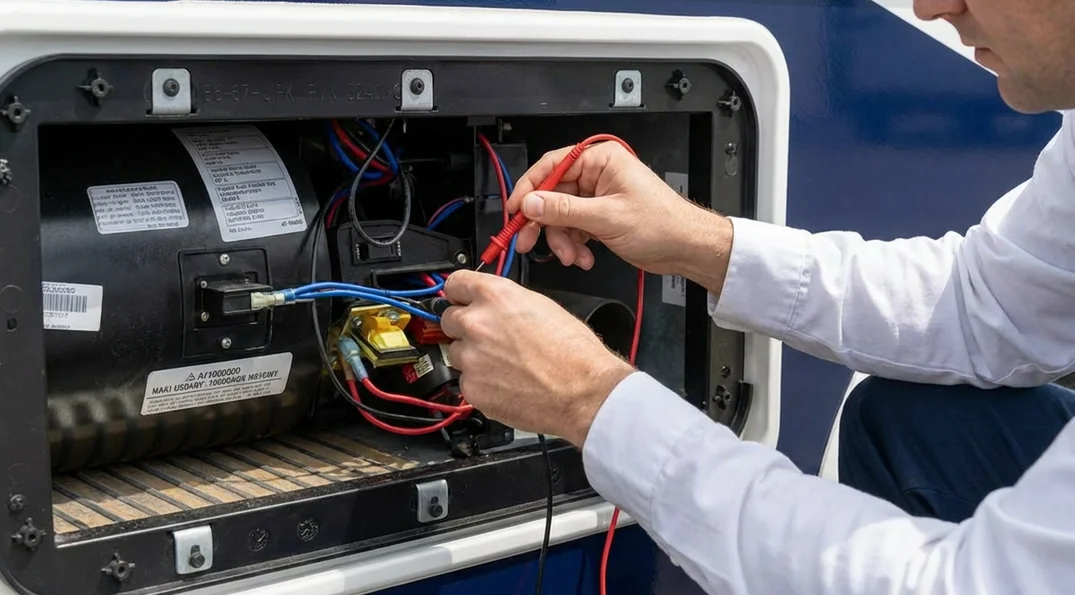
Solar charging faults follow the power flow from the panel through the wiring to the controller and then to the battery. Diagnosing at any point before verifying the point upstream wastes time and can lead to replacing a good component. Our technicians always start at the panel itself.
We measure open-circuit voltage at the panel junction box in direct sun - a 100-watt Renogy panel should produce 21 to 23 volts. If the panel is producing correct voltage and the string voltage at the controller input is correct but the controller shows no output, the controller is suspect. If the panel is producing low voltage, the panel itself has failed or is shaded.
If the panel produces correct voltage but the string voltage at the controller is zero, the fault is in the wiring between panel and controller - typically a blown fuse, a failed MC4 connector, or a wire that has pulled from its terminal. This sequence identifies the fault location without replacing components by elimination.
Charge Controller Fault Codes and What They Mean
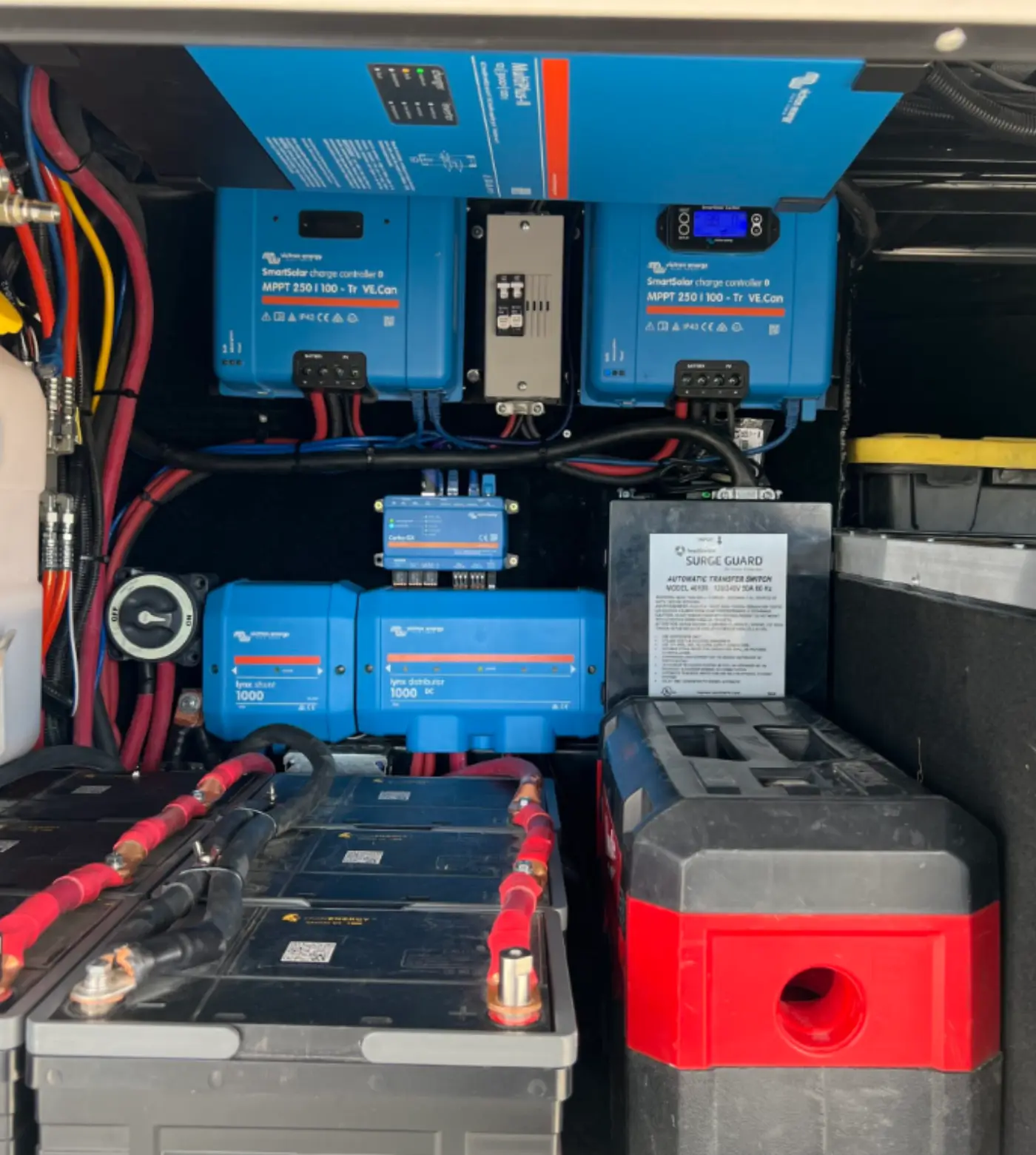
Victron SmartSolar, Renogy Rover, and Epever Tracer MPPT controllers all generate fault codes accessible either through the controller's display or through a Bluetooth app. Victron's VictronConnect app logs the fault with a timestamp and a plain-language description - common codes include high battery voltage, which indicates the battery BMS disconnected the charge circuit and the controller saw a voltage spike above the absorption setpoint; high panel voltage, which means the panel open-circuit voltage exceeded the controller's input limit; and temperature sensor failure, which puts the controller in a safe charging mode with conservative voltage setpoints. Epever Tracer units display numeric codes on the controller's LCD - code 0x01 is a battery over-voltage, 0x02 is a battery under-voltage, and 0x03 is a panel over-current.
We carry the fault code reference for all three platforms and translate the code into a specific investigation path before replacing any hardware. Many solar charging faults are resolved by correcting a wiring error or configuration mistake rather than replacing a component.
RV Solar Installation & Repair Cost in Daytona Beach, FL
| Service | Typical Cost | Notes |
|---|---|---|
| Service Call + First Hour | $299 - $399 | Travel + diagnostics anywhere in Volusia County |
| Single 200W Panel Install | $400 - $700 | Panel, wiring, and roof penetration seal |
| 400W Dual Panel System | $750 - $1,300 | 2 x 200W panels, MPPT controller, and wiring |
| 100Ah Lithium Battery Install | $600 - $1,000 | Drop-in lithium; includes BMS and wiring updates |
| MPPT Charge Controller Replace/Install | $200 - $450 | Victron or Renogy MPPT; includes programming |
| Solar Diagnostic and Repair | $150 - $350 | Panel output test, controller check, shading analysis |
Pricing note: Ranges shown are average costs for the Daytona Beach, FL market based on common repair scenarios. The exact cost of your repair depends on your RV make and model, the severity of the issue, and parts availability.
Only a technician on-site can provide an accurate estimate after inspecting your RV. A written estimate is provided before any work begins - you approve it before we start.
RV Solar Not Charging - Common Questions
My charge controller display shows watts coming in but my batteries are not gaining charge - what is wrong?
This symptom usually points to a battery that is too deeply discharged for the controller to begin bulk charging, a bad cell in the battery bank holding terminal voltage artificially high, or a wiring fault between the controller and the battery terminals. Our tech will load-test each battery individually and trace voltage drop from the controller output to the battery posts to isolate the fault.
How do I tell if my solar panel is producing power or is dead without special equipment?
In direct sun, measure open-circuit voltage across the panel's MC4 connectors with any basic multimeter - a healthy 100W 12V panel should read 20 to 22 volts. If you read zero or a few millivolts, the panel has either a broken bypass diode, a cracked cell string, or a failed junction box. Our tech carries a solar irradiance meter to normalize the reading against actual sun intensity so we can confirm whether output is within spec.
Can shade from a roof vent or AC unit cause a complete solar charging failure, not just reduced output?
Yes - panels wired in series are vulnerable to the weakest cell dragging down the entire string's voltage, and even partial shade on one panel can drop system voltage below the charge controller's minimum input threshold. Panels wired in parallel are more shade-tolerant but lose some wire efficiency. We assess your roof layout and can rewire the array or add bypass diodes to minimize shading losses.
My Victron SmartSolar shows 0 watts at noon on a sunny day - what should I check first?
First, open the VictronConnect app and check the history tab for any logged protection events - a high-battery-voltage event from a BMS disconnect is the most common cause of midday charging loss. Second, measure battery terminal voltage - if it reads above 14.4 volts, the battery is full and the controller is correctly tapering charge. If battery voltage is below 13 volts and the controller still shows zero watts, the fault is in the panel wiring or a blown fuse.
Can shading from a rooftop vent or AC unit significantly reduce solar output?
Yes, and the impact is far larger than most owners expect on series-wired panel arrays. In a series string, shading one panel reduces the string current to the output of the shaded cell, cutting the entire array's output by 50 to 80 percent.
Parallel-wired arrays are more shade-tolerant because each panel operates independently. We assess your roof layout and panel wiring during any solar service call and recommend reconfiguration if shading is reducing your daily harvest significantly.